British Army Conducts First Successful Test of Radio-Wave Weapon Against Drone Swarms
October 3, 2025
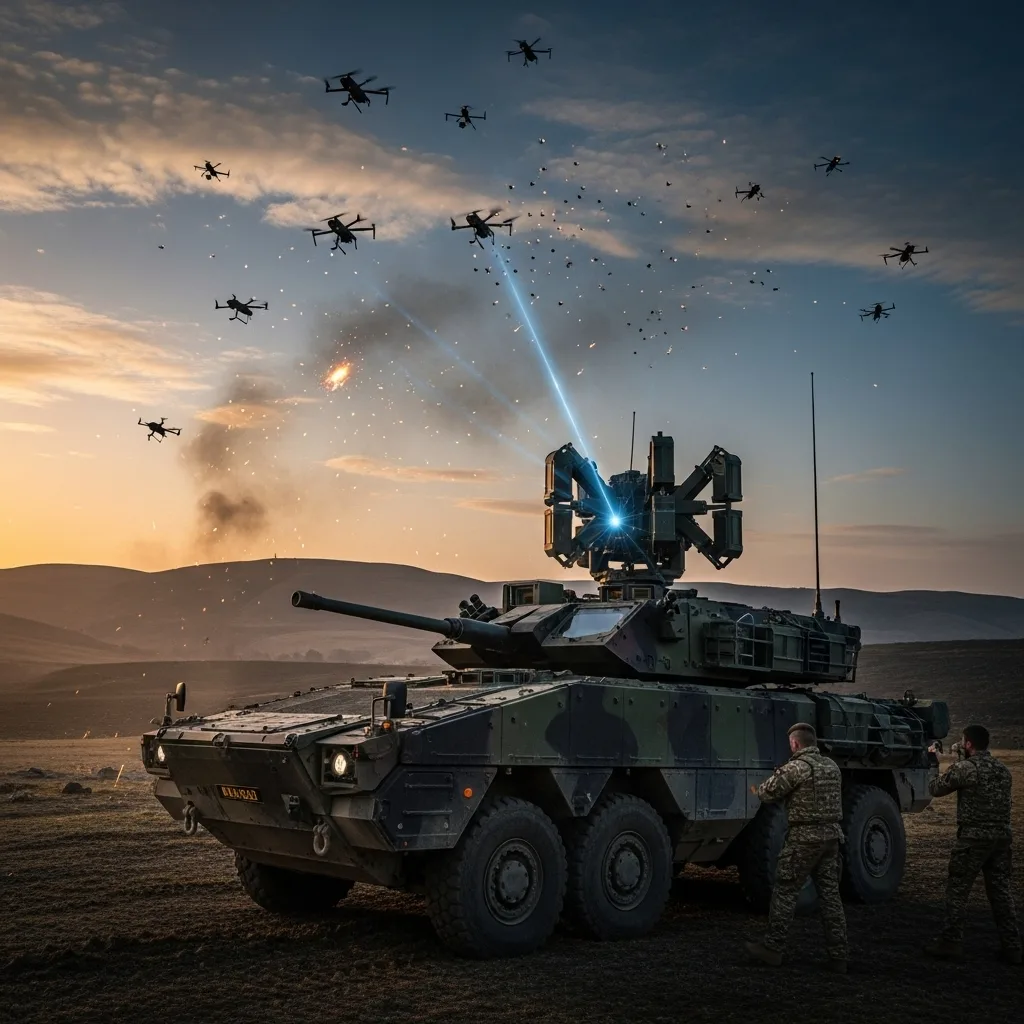
The British Army has successfully demonstrated a new radio-wave weapon designed to disable swarms of hostile drones, marking a milestone in counter-drone technology as militaries worldwide race to address one of today’s fastest-growing battlefield threats.
According to the U.K. Ministry of Defence, the latest trials proved that the system can take down multiple drones at once by directing bursts of high-frequency energy at their electronics. Developed by a consortium led by Thales UK, the technology works by disrupting or destroying internal components, forcing drones to malfunction or crash.
During the exercise, soldiers from the 106 Regiment Royal Artillery neutralized two drone swarms in a single strike, with more than 100 drones disabled across all tests. The system, classified as a radio-frequency directed-energy weapon, demonstrated the ability to engage multiple targets almost instantly.
So far, the U.K. government has allocated over £40 million (US$53 million) toward developing the weapon. Each shot is estimated to cost just 10 pence, making it a low-cost complement to missile-based air defense systems. Unlike traditional jamming methods, the system can defeat drones that are resistant to electronic warfare and is effective at ranges of up to 1 kilometer (0.62 miles).
Officials highlighted that the weapon could play a crucial role in protecting sensitive locations such as military installations and airports, where drone intrusions have previously caused widespread disruptions.
Sgt. Mayers, a senior remotely piloted air systems operator with 106 Regiment Royal Artillery, became the first British soldier to down drones with this technology. He described the system as quick to master and straightforward to operate. The trials took place at Air Defence Range Manorbier in southwest Wales.
The primary aim of the project, the MoD said, is to examine how such weapons can be integrated into Army operations and to assess the challenges of deploying radio-frequency directed-energy weapon systems (RF DEWs) in real-world scenarios.
The weapon is being developed by Thales, which employs around 100 engineers and manufacturing staff in Northern Ireland. A further 30 to 35 jobs are supported in the supply chain in Essex, according to the MoD.
“Thales continues to lead in advancing this breakthrough technology, and we are proud to push forward research and development in partnership with the Ministry of Defence,” said Nigel MacVean, Managing Director of Thales Integrated Airspace Protection Systems.
The MoD confirmed that it is working with several industry partners to bring RF DEW capabilities into service for the British Armed Forces in the coming years.