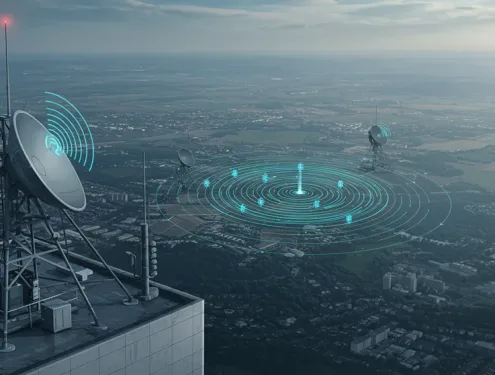
Antennas in Smart Cities: Powering the Future of Urban Connectivity
November 7, 2022

Antenna Technologies Enabling Seamless Integration in the Modern Urban Landscape
Antennas are essential to the development of smart cities, where technology and data come together to enhance the quality of life for residents and improve city management. As urban areas become more interconnected, antennas enable a wide range of applications from traffic management to environmental monitoring.
One of the key uses of antennas in smart cities is in the deployment of IoT networks. These networks rely on low-power wide-area (LPWA) antennas to connect thousands of sensors and devices scattered across urban environments. Whether it’s monitoring air quality, managing waste, or tracking public transportation, these antennas ensure continuous data collection and communication in real time.
Smart traffic management systems also depend on antennas for efficient communication between vehicles, traffic lights, and control centers. V2X (Vehicle-to-Everything) communication, powered by antennas, enables vehicles to communicate with the city’s infrastructure, reducing traffic congestion, preventing accidents, and improving fuel efficiency. This technology allows for a more responsive and adaptive traffic system.
Smart grids, which optimize energy use in urban areas, rely on antennas to connect meters, sensors, and control systems. These antennas ensure real-time data transmission, enabling utilities to monitor and manage energy consumption efficiently, reduce waste, and integrate renewable energy sources seamlessly into the grid.
Antennas also play a critical role in public safety systems, including emergency communication networks. These systems connect first responders, security cameras, and sensors to ensure rapid response times and enhance situational awareness during crises.
As smart cities continue to grow, the need for reliable, high-performance antenna systems will only increase, enabling cities to be more sustainable, efficient, and livable for their inhabitants.